
Replacing Concrete That's Past Repair
Commercial Concrete Removal and Replacement in Shreveport
Damaged concrete at your commercial property in Shreveport doesn't just look bad—it creates safety hazards, interferes with operations, and signals neglect to customers and tenants. Cracks widen, slabs settle, and surfaces break apart under the weight of vehicles or foot traffic. Older commercial properties across Shreveport often face these issues as original concrete reaches the end of its functional life or underlying base problems finally show up at the surface.
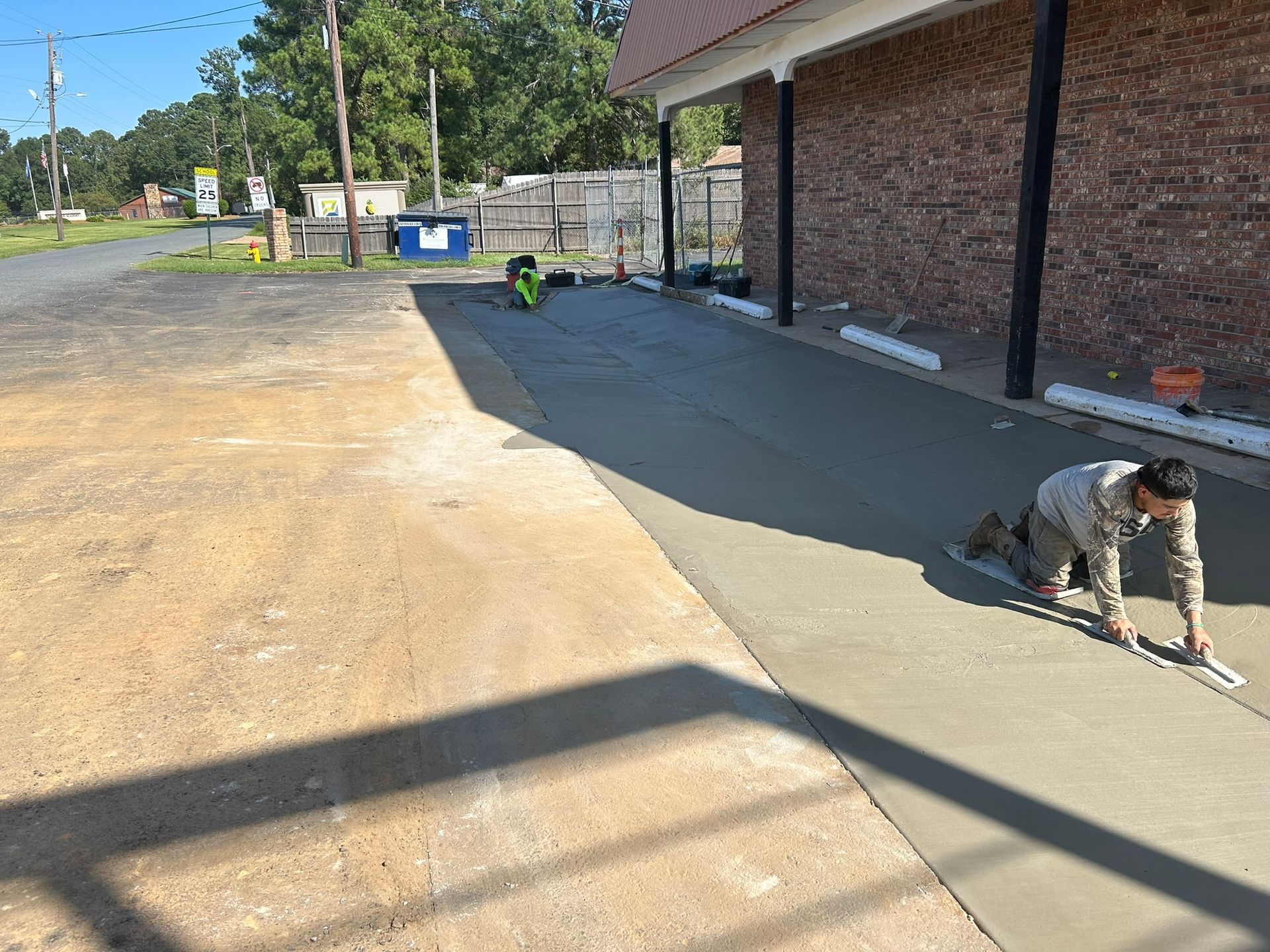
Shreveport Concrete & Patios removes and replaces damaged or failing commercial concrete, including drive lanes, loading areas, and flatwork. Replacement resolves not just the visible damage but the structural and base-related issues that caused the failure in the first place. Work is planned to reduce business disruption, and scheduling can be phased to keep parts of your property accessible during construction. The new concrete is poured with proper thickness, reinforcement, and drainage to perform under the conditions that damaged the old surface.
On-site assessments determine scope and scheduling for your property in Shreveport or the surrounding area.
Why Replacement Fixes What Patching Can't
The process starts with removing the damaged concrete and exposing the base beneath. In Shreveport, this often reveals compacted or washed-out base material, poor drainage that allowed water to accumulate under the slab, or inadequate thickness that couldn't handle the loads placed on it. The base is repaired or replaced, graded for drainage, and compacted before new concrete is poured.
After replacement, you'll see a level surface that no longer collects water or shifts under vehicle weight. Cracks and heaving are gone, and the new slab sits flush with adjacent concrete or asphalt. Loading areas support truck traffic without breaking apart, and foot traffic moves across the surface without tripping on uneven joints or raised edges.
Reinforcement is added to resist cracking under repeated loads, and control joints are placed to manage expansion and contraction. If your property requires specific thickness for heavy equipment or high-traffic areas, that's incorporated into the replacement. This work does not include resurfacing, decorative finishes, or repairs to adjacent structures unless arranged separately. Scheduling is coordinated to minimize downtime and keep critical access points open whenever possible.
This Is What Most Property Owners Ask
Replacing commercial concrete involves planning around your operations, and it's normal to want details about what the process looks like and how long access will be affected.
How do you decide what needs to be replaced?
The assessment looks at visible damage, base condition, and how the concrete is performing under current loads. If cracks are widespread or the slab has settled significantly, replacement is usually more cost-effective than repeated repairs.
What happens to the old concrete?
The damaged concrete is broken up using equipment suited to the thickness and reinforcement present, then hauled off-site. Base material is evaluated and either reused after grading or replaced if it has failed.
Can you replace just part of the concrete?
Yes, partial replacement is common for properties where only certain sections have failed. New concrete is tied into the existing surface with proper joints and reinforcement to prevent separation.
How long will the area be closed?
Most replacements take a few days, depending on the size of the area and site access. Curing time means light vehicles can typically return after a week, with full curing complete in about 28 days.
What if drainage was part of the original problem?
Drainage issues are addressed during base preparation by adjusting grading and slope or adding features to redirect water away from the new slab. This prevents the same problem from recurring once the concrete is replaced.
Shreveport Concrete & Patios works with property managers and business owners throughout Shreveport and the surrounding area to plan replacement projects around operational needs and access requirements. On-site assessments confirm the extent of damage and determine the best approach before work begins.